
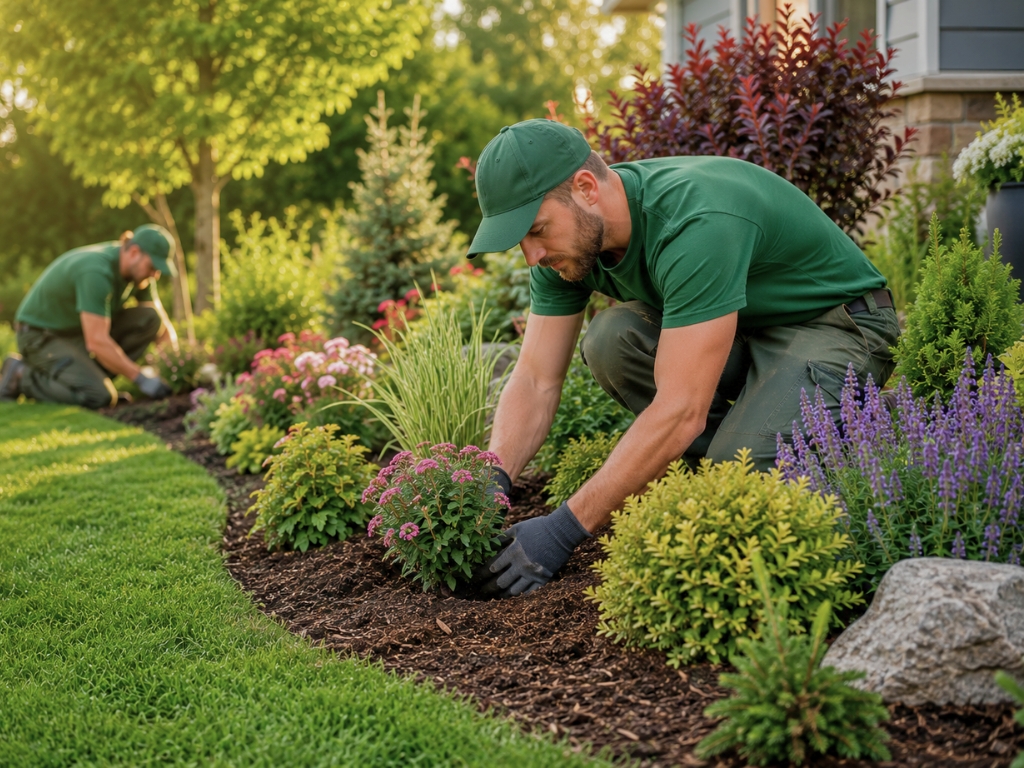
A garden can be healthy and regularly maintained but still feel like something is missing. Maybe the planting beds look sparse, shrubs have lost their shape, or the lawn no longer creates a clean backdrop for the rest of the landscape.
The good news is that improving your outdoor space does not always require a complete landscape renovation.
Targeted garden enhancement services can refresh existing features, improve problem areas, and bring more structure to your landscape. The right enhancements can also make established plants, walkways, lawns, and outdoor features work better together.
If you are wondering where to begin, these seven garden enhancements can make some of the biggest visual differences.
What Are Garden Enhancement Services?
Garden enhancement services focus on improving an existing landscape rather than completely redesigning it. They are useful when much of your yard is already functional but certain areas need attention.
Enhancements can include planting, pruning, mulching, edging, landscape lighting, hardscape improvements, and lawn restoration. Several services can also be combined as part of a larger property refresh.
The difference between enhancement and routine maintenance comes down to purpose. Maintenance helps preserve what you already have. Enhancement focuses on making strategic changes that improve how your landscape looks or functions.
How to Enhance a Garden?
Start by looking closely at what you already have.
Which parts of your garden look good? Which areas appear empty, overgrown, dated, or disconnected from the rest of the property?
Consider factors such as plant health, seasonal color, garden-bed shape, lawn condition, pathways, lighting, and how plants of different heights work together. You may find that you do not need more of everything. You simply need to improve the areas that are creating the biggest visual problems.
For example, a crowded garden may benefit more from pruning than additional plants. A sparse landscape might need layered planting. If everything looks good during the day but disappears after sunset, lighting could become the priority.
Once you understand what is missing, you can choose garden enhancement services that address those specific weaknesses.
1. Refresh Garden Beds With New Plants and Layered Planting
Planting is one of the most noticeable ways to transform a garden.
Older landscapes can develop empty spaces as plants decline or are removed. Other beds may contain plants of similar heights, leaving the landscape looking flat.
Layered planting creates more depth by combining plants with different heights, forms, textures, and colors. Trees or taller shrubs can establish the background, while smaller shrubs and perennials fill the middle. Groundcovers and seasonal flowers can bring detail to the front.
However, more plants do not automatically create a better garden. Each addition should have enough room to reach its mature size.
Sun exposure, soil conditions, drainage, local climate, and maintenance requirements should also guide your choices. Thoughtful plant selection helps create a garden that looks intentional rather than overcrowded.
2. Add Fresh Mulch and Clean Garden Bed Edges
Sometimes the plants are not the problem. The areas surrounding them simply need attention.
Fresh mulch and clearly defined edges can quickly give planting beds a cleaner appearance. Edging creates separation between lawns, beds, pathways, and other landscape features, making each area easier to distinguish.
Mulch provides a consistent background that can make foliage and flowers stand out. It also serves practical purposes by helping retain soil moisture and suppress weeds when installed correctly.
Avoid piling excessive mulch around tree trunks or plant crowns. Proper placement matters for plant health as much as appearance.
When combined, fresh mulch and crisp bed lines can make an established garden look noticeably more organized without requiring major construction.
3. Use Strategic Pruning to Reshape Overgrown Landscaping
Plants change significantly as they mature.
Shrubs that once fit neatly underneath windows can grow too tall. Tree branches can block views, and neighboring plants may begin competing for space. Eventually, the landscape can lose the structure that made the original design attractive.
Strategic pruning can restore definition.
Removing dead, damaged, crossing, or excessive growth can reveal the natural form of plants while creating more separation between landscape elements. Pruning may also expose architectural details or focal points that have become hidden.
Timing and technique matter, though. Different plants have different pruning requirements, and excessive cutting can affect their appearance and health.
The objective should be to improve the plant’s structure rather than simply making everything smaller.
4. Create a Focal Point With a Landscape Feature
Where does your eye naturally go when you look across your garden?
If there is no clear answer, the landscape may benefit from a focal point.
A specimen tree, decorative planter, natural stone feature, bench, sculpture, or small water feature can create visual interest. Surrounding plants can then frame that feature and connect it to the rest of the garden.
Scale is important. A feature that is too large can dominate a small yard, while something too small may disappear within extensive planting.
Placement matters too. Consider views from patios, windows, entrances, and frequently used walkways. A well-positioned focal point can make an existing garden feel more deliberate without requiring changes throughout the entire property.
5. Upgrade Walkways, Borders, and Hardscape Details
Plants receive plenty of attention during a garden enhancement, but hardscape details can have just as much influence on the finished appearance.
Worn pathways, inconsistent borders, or poorly placed stepping stones can make a landscape feel disconnected. Updating these elements can create clearer transitions between different parts of your outdoor space.
Depending on the property, improvements could include paver paths, natural stone, decorative gravel, stepping stones, or updated garden borders.
Try to connect these materials with features already used around the home. Repeating similar stone, paver, or architectural details can help the house and garden feel like parts of the same design.
Walkways should also serve a practical purpose. They can guide visitors through the landscape while preventing frequently traveled areas from becoming worn or muddy.
6. Install Landscape Lighting to Transform the Garden After Dark
Your garden does not have to disappear when the sun goes down.
Landscape lighting can highlight selected plants, trees, pathways, architectural features, and changes in elevation. It can also create a completely different view of familiar landscaping after dark.
Exterior lighting has broad appeal among homeowners. According to the National Association of Home Builders’ What Home Buyers Really Want 2024 Edition, 87% of buyers rated exterior lighting as an essential or desirable home feature.
Different lighting techniques create different effects. Uplighting can emphasize a specimen tree, while path lights can define walkways. Accent lighting can draw attention to stonework or distinctive plants.
More fixtures are not necessarily better. Strategic placement and controlled brightness generally produce a more balanced result than illuminating every feature in the yard.
7. Restore the Lawn and Improve Transitions Between Landscape Areas
Even beautiful planting beds can lose some of their impact when surrounded by a thin, patchy, or poorly defined lawn.
Depending on its condition, lawn enhancement could involve repairing bare areas, overseeding, improving edges, or addressing sections that continually struggle.
In some yards, reducing turf may make more sense. Difficult corners, steep slopes, heavily shaded areas, and narrow strips of grass could potentially become expanded garden beds or other landscape features.
Pay attention to transitions as well. Clean connections between lawns, garden beds, pathways, patios, and other surfaces help create a more polished overall appearance.
Which Garden Enhancement Services Should You Prioritize?
Your starting point should depend on your property’s current condition.
An overgrown garden may need pruning before anything else. Sparse beds could benefit from new planting, while poorly defined areas might need edging and mulch. If your landscape looks appealing during daylight but lacks character at night, landscape lighting could make a greater difference.
Think about improvements as parts of one landscape rather than isolated projects. For example, pruning overgrown shrubs could reveal space for new planting. Fresh plants may look even better after the bed is reshaped, edged, and mulched.
Give Your Existing Garden a Fresh Look
A noticeable landscape improvement does not always require starting over. The best enhancement depends on what your landscape needs now.
Walk around your property and identify the area that catches your attention for the wrong reason. Is it an empty planting bed? An overgrown shrub line? A worn pathway? A patchy lawn?
That problem can help you determine which garden enhancement services should come first.
If you want several improvements to work together as one cohesive landscape, Colonel Landscaping can assess your existing garden and recommend targeted enhancements that can make the greatest visual difference.